
Published: 12/07/2024 By Richard Miller
Water, water everywhere, but how clean are our rivers asks Richard Miller.Let me be clear: I am no scientist, and I am no learned environmentalist. But I do have 40-plus years’ experience of poking around in the rivers and streams of Dorset, chucking artificial flies at some of the most discerning trout, in the often-vain hope they might be fooled.
I cannot describe the changes I have seen to the habitat in that time as dramatic – the basic scene before me when thigh-deep looks much the same as in the 1980s – but it is significant.
And to those who know, the signs have been worrying. In fact, it is fair to say that back in the 1960s and 1970s, there were some pretty awful crimes committed against our rivers, which have become generally forgotten in the mists of time. My grandfather stopped fishing for salmon on the lower River Frome when it was dredged and straightened as part of a “flood relief and river improvement scheme”. With recent enlightenment much of the gravel previously removed has been reinstated.
We should also not forget that tipping raw sewage into rivers is nothing new; for my sins, I am secretary of the Dorchester Fishing Club, and I am lucky to have access to our club records going back to the early 20th century. As late as the 1960s, our annual members’ catch return distinguished between the weight of “clean” trout caught above the outfall at Louds Mill in Dorchester and those classed as (heavier) “sewage-fed” trout caught below it. In those days most fish were killed and eaten.
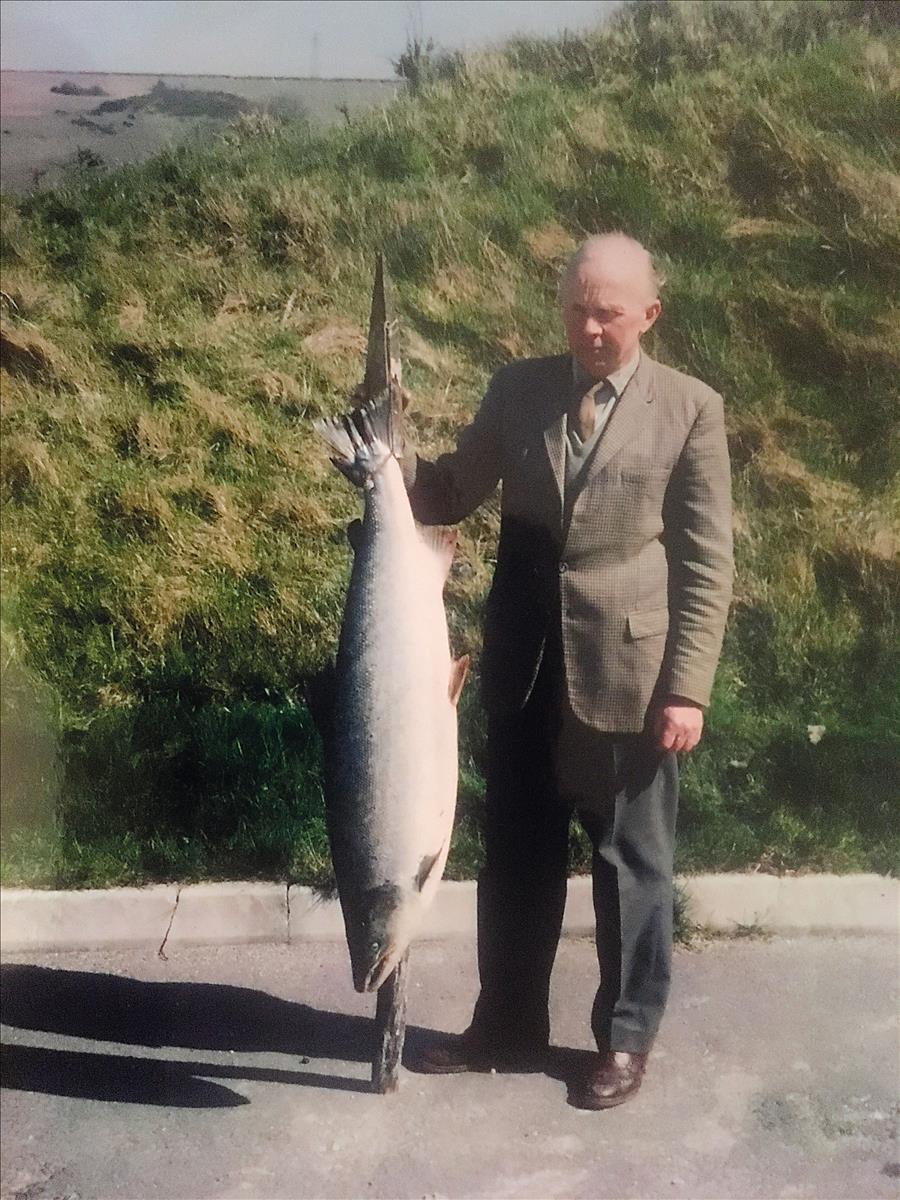
John Miller with the sort of salmon the River Frome used to produce back in the day.
Maybe we had stronger stomachs in those days, but that’s a debate for another day. It’s just that these days we put so much more pressure on water resources and the land around us, expecting our rivers to cope and wash away our dodgy habits. An increased population, using way more water than we used to, excreting more, washing more and with questionable chemicals, building more, cropping the land in ways that haven’t sat comfortably with environmental protection. The list goes on. And the current weather pattern of warm and stormy winters followed by drought-prone summers turbocharges the contributory issues.
So, what do I see when waiting for a trout to rise? Well, often far more flow at times and, equally, far less flow at other times, than I recall being the case back in the day. Of course, there are exceptions – I can just about remember the drought of 1976 – but the extremes just seem to roll around more frequently now. And a generally warming climate doesn’t help fish populations – their eggs don’t like our recent tropical winters.
In the spring, around mid to late April, I also see the usually gin-clear water going cloudy. It’s as though somebody has dropped a bit of gravy in the Gordon’s. It’s an algal bloom caused by excess nitrogen and phosphorous in warming spring sunshine, consuming oxygen and blocking sunlight. When combined with the excessive sediment, washed down from land over winter, it creates a layer of gunk on the riverbed, stopping the river weed from growing.
The most valuable of these river weeds is ‘ranunculus fluitans’, or water crowfoot. It has long, wavy strands with buttercup-type flowers, and it harbours all the invertebrates that eventually hatch from the surface, bringing the trout on the feed. No ranunculus means no home for invertebrates and no hatching into flies. And no splattering of those flies onto windscreens like we had when driving along river valleys on warm summer evenings in the good old days.
Thankfully, we realise that things cannot go on like this. At last, the government has been forced to wake from its environmental slumber (thank you, Feargal Sharkey, and many others on the campaign trail) and now has a plan to improve the health of our rivers while also seeking to better safeguard our precious drinking water.
The stick is finally being dusted off and applied to the water companies. A more carrot-based approach is being offered to farmers and land managers to lessen the environmental pressure from intensive farming and improve our regard for our rivers.
If that means I can stand beside my beloved River Frome and watch more insects hatching, more swallows feeding on them, more kingfishers dazzling, more bats flitting at dusk – and more trout rising – then it will be a sign that the collective effort to sort out our water problem will at least be starting to work.
This article is on page P9 of Country Matters 2024, which you can find below, or please call your nearest Symonds & Sampson office to collect your free copy.